A crane operator on land can rely on one important thing before a lift even begins: the ground beneath the crane isn’t moving. At sea, that assumption disappears. How different is operating a crane on a vessel compared with land-based cranes? The basic lifting principles may be familiar, but vessel motion, waves, wind, changing load forces, limited deck space, and offshore conditions add an entirely different layer to the job. For a marine crane operator, controlling the crane also means constantly accounting for what the vessel, the load, and the environment are doing at the same time.
That is why experience with land-based cranes does not automatically translate into offshore proficiency. Marine lifting calls for equipment designed for the environment and operators who understand how quickly conditions can change.
What Is the Biggest Difference Between Operating on Land and at Sea?
The biggest difference is the foundation beneath the crane. A properly set up land-based crane works from a relatively stable surface, while a vessel responds continuously to waves, swell, wind, currents, and changing loads.
Pitch, roll, and heave can change the crane’s position relative to a suspended load. Even when the operator holds the controls steady, the vessel itself may rise, fall, or tilt.
An offshore operator cannot focus only on what the boom and hook are doing because they must also account for the movement of the entire platform.
How Does Vessel Motion Affect a Suspended Load?
When a vessel moves, the load may rise, drop, swing, or accelerate as the vessel moves beneath it.
This movement creates dynamic loading, where forces on the crane and rigging change rather than remaining constant. A load that weighs the same throughout the lift can place considerably different forces on the various equipment.
For the operator, that means smooth control matters a great deal. Abrupt starts, stops, or slewing movements can add even more motion to a load on the sea.
Is Communication More Important on a Crane Vessel?
Communication is critical during any crane operation, but marine lifts often involve several teams working together.
The crane operator may depend on information from deck personnel, riggers, signalers, vessel officers, and other members of the operation. Visibility may be limited by the load, boom position, vessel structure, or deck equipment.
There may also be moments when the safest move is to stop and wait rather than continue trying to place the load during unfavorable vessel movement.
Offshore crane training reflects this added complexity. DNV’s offshore crane operator framework progresses operators through restricted lifts before allowing more complex operations, including transfers involving boats.
How Does Limited Deck Space Change Crane Operation?
A crane vessel does not offer an unlimited working area. Deck space may already contain equipment, rigging, containers, winches, machinery, or other mission-specific systems.
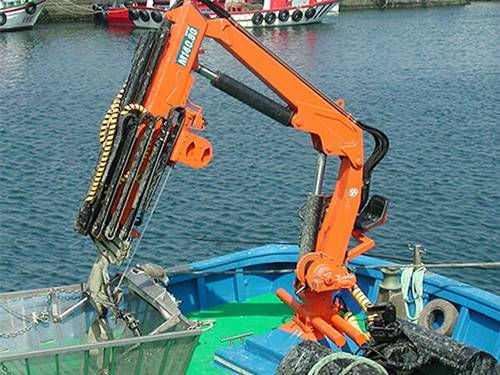
DMW notes that knuckle boom cranes can be particularly useful aboard vessels because their articulated designs provide versatility in tight deck environments. The company also points to reduced pendulum distance as an advantage for certain shipboard load-handling applications.
Operators must stay aware not only of the suspended load but also of surrounding structures, equipment, personnel, boom clearance, and the load’s travel path.
A few feet of extra movement may matter far more on a crowded deck than on an open construction site.
Does the Marine Environment Affect the Crane Itself?
Yes. Operating technique is only part of the difference. The equipment also spends its working life exposed to conditions that land cranes may rarely encounter.
Saltwater, spray, humidity, and changing temperatures can accelerate corrosion and affect mechanical, hydraulic, and electrical components. DMW designs marine cranes for industries including offshore oil and gas, workboats, research vessels, military applications, and offshore wind, where that exposure is expected, not exceptional.
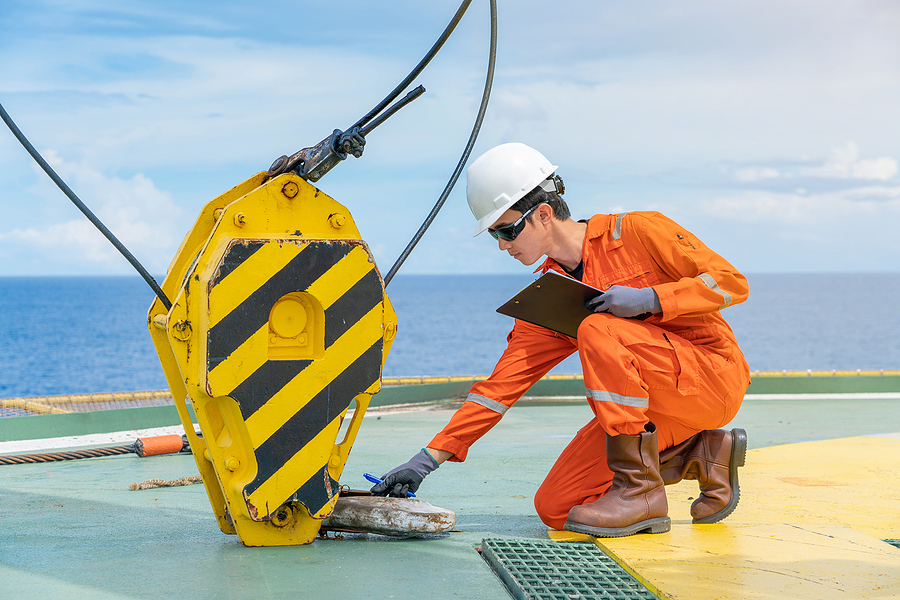
Inspection and maintenance therefore become closely connected to safe operation. An operator who notices unusual movement, leaks, changes in response, abnormal sounds, or other symptoms should not simply treat them as normal consequences of working at sea.
Why Does Offshore Crane Experience Matter?
Marine lifting requires the operator to process several changing variables simultaneously. The load may swing, the vessel may roll, wind may increase, and the destination itself may move.
Technical skill on the controls is essential, but so is judgment.
Knowing when to slow a movement, when conditions are beginning to exceed operating limits, and when a lift should stop can be just as important as knowing how to make the lift in the first place.
DNV describes cranes and lifting appliances as inherently high-risk equipment and maintains specialized offshore crane operator and inspection programs because marine lifting brings its own operational requirements.
How Different Is Operating on a Crane Vessel Compared With Land-Based Cranes?
So, how different is operating on a crane vessel compared with land-based cranes? The controls may perform familiar functions, but the environment changes almost everything. Vessel motion creates dynamic loads, wind and currents influence positioning, deck space is limited, stability must be considered throughout the lift, and conditions can change while a load is still on the hook.
DMW Marine Group has supplied marine cranes for military, offshore, workboat, oceanographic, and other demanding maritime applications for more than 30 years. Contact DMW Marine Group to discuss marine crane selection, service, inspection, repair, or modernization and find equipment designed around the realities of lifting at sea.