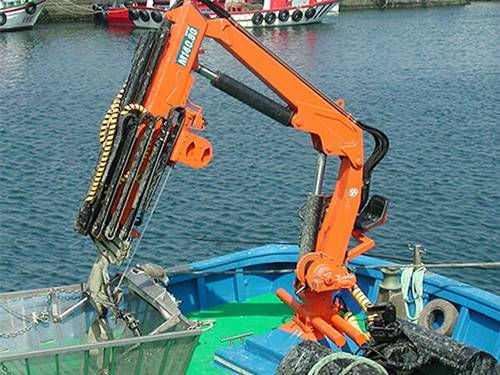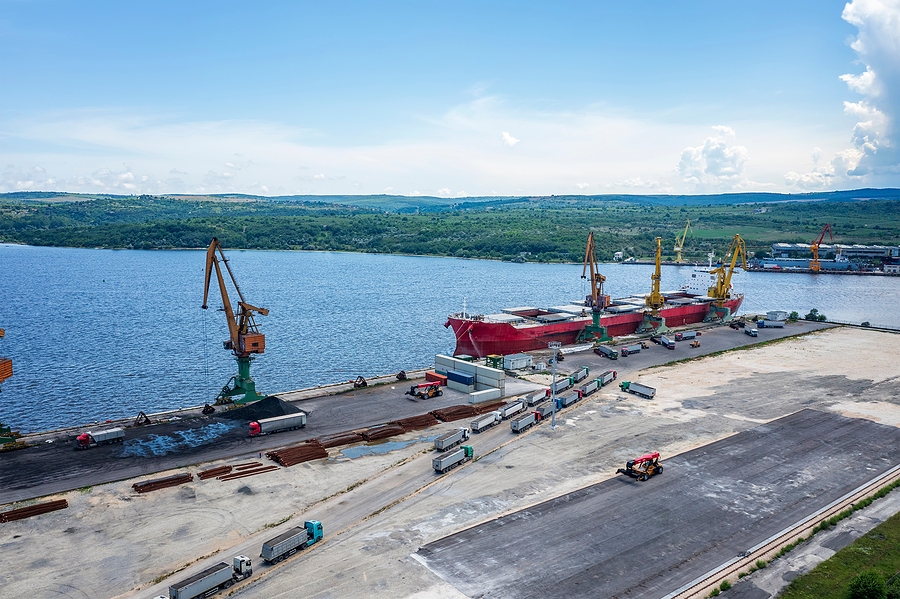
Marine cranes handle some of the toughest lifting jobs on the planet. Stationed on offshore platforms, drilling rigs, heavy lift ships, support vessels, or port facilities around the world, these cranes need to function safely while working in windy conditions, heavy seas, on moving vessels, and while supporting heavy loads. Slewing brakes help operators control crane rotation and prevent inadvertent crane movement during lifting operations.
Today we’re going to answer the question of how marine crane slewing brakes work, and why they are considered safety-critical.
Without functioning slewing brakes, cranes can lose the ability to control their loads. This is especially true for offshore cranes that can experience vessel or wind forces that impact crane rotation in a matter of seconds.
What Is a Marine Crane Slewing System?
A crane’s slewing system allows it to rotate horizontally around its pedestal or base of support. The slewing motion allows crane operators to move loads in different directions without moving the vessel or structure.
The slewing system can include slewing bearing, drive motors, gears, control components, and braking systems.
Marine cranes rotate quite often, so it’s important to maintain control of this motion.
What Is a Slewing Brake?
A slewing brake is a braking system used to control or hold the rotation of a crane. Slewing brakes work with the crane’s slewing drive system to help stop crane rotation and prevent unwanted movement.
Think of slewing brakes as the brakes you use to stop forward motion on a vehicle. These brakes help you control the rotational forces that act on the crane. Slewing brakes help operators keep the crane boom from moving around while lifting.
Most slewing brakes are installed within the slewing drive assembly. Slewing brakes are designed to operate reliably even in harsh conditions.
How Do Marine Crane Slewing Brakes Work?
Marine crane slewing brakes provide braking force to help operators hold the crane’s position. When the slewing brake is applied, it provides resistance to crane rotation.
When the operator is moving the crane boom to a desired location, the slewing drive is used to provide rotation. Once the operator is satisfied with the boom position, they can apply the slewing brake to help prevent unwanted movement.
Typically, hydraulics are used to release the brake when the operator needs to move the crane. When the hydraulic pressure is relieved, springs apply the brake automatically.
This automatic application is a type of fail-safe braking feature. The fail-safe nature of this design allows the brake to continue functioning even if hydraulics or power fail.
Why Are Slewing Brakes Considered Safety-Critical Components?
Slewing brakes help ensure the safe operation of a crane by allowing the operator to maintain control of load positioning. Should a slewing brake fail while a load is suspended, the crane may rotate, causing the load to move abruptly.
If a slewing brake fails on an offshore crane, the wind can cause the crane to rotate quickly. Some consequences of uncontrolled crane rotation include:
- Load swings
- Collisions with equipment
- Structural damage
- Personal injury
- Dropping the load
- Impacts with the platform or vessel
Operations on marine vessels and offshore platforms occur in limited spaces. It’s important that loads can be controlled and secured to prevent accidents.
Slewing brakes play a key role in preventing inadvertent movement of the crane or load. For this reason, slewing brakes are considered safety-critical components.
How Do Environmental Conditions Impact Slewing Brake Function?
Salt water, humidity, wind, vibration, temperature extremes, and heavy usage can all take their toll on slewing brake performance. Moving parts can corrode, hydraulics can become contaminated, and friction surfaces can wear down.
All of these environmental conditions can cause slewing brakes to lose performance over time. That’s why it’s important to inspect brakes and perform maintenance as needed.
If left unchecked, worn slewing brakes may not be caught until they fail or cause an issue.
What Consequences Stem From Slewing Brake Failure?
Should a slewing brake fail while in operation, it can create operational downtime and possible safety incidents. Depending on the situation, slewing brake failure can allow the crane to rotate when it shouldn’t.
Some things that can happen if a slewing brake fails include:
- Boom can move uncontrollably
- Loads may begin to swing excessively
- Increased stresses on structural components
- Damage to nearby equipment
- May cause longer than normal downtime
In some cases, failure of a slewing brake can create an unsafe condition that will force you to shut down the crane until repairs can be made.
Routine inspections can help identify slewing brake problems before they lead to failure.
How Are Slewing Brakes Inspected and Maintained?
Inspecting slewing brakes helps ensure that they will function when operators need them to. Maintenance procedures can vary by crane make and model, but here are some common things technicians inspect.
- Condition of brake pads/friction material
- Hydraulics
- Springs and actuators
- Mounting hardware/bolts
- Control components
- Brake holding capacity under load
During a routine inspection, if technicians find excessive wear, corrosion, leaks, or other issues that could impact braking performance, they should be corrected. Corrective maintenance can help extend the service life of components and reduce the chance of unexpected failures.
Are Slewing Brakes Necessary During High Winds?
Yes. Slewing brakes are necessary during high winds. Anything that can cause the crane or load to move should be considered when performing lifts.
If the wind is strong enough, it could cause the crane or load to move if not secured properly. Slewing brakes can help prevent the crane from moving due to wind.
DMW Marine Group Can Help With Your Marine Crane Inspection Needs
Knowing how marine crane slewing brakes work and why they are considered safety-critical is only half the battle. Properly inspecting, maintaining, and repairing these systems is equally as important. Slewing brakes allow crane operators to control the load and prevent the crane from moving if something were to happen.
At DMW Marine Group, we provide marine crane inspections, maintenance services, repairs, certification, and technical support for offshore and marine lifting equipment. Our experts will help you maintain these critical safety components, identify problems before they create failure, and keep your cranes working reliably no matter where they’re located. Contact DMW Marine Group today to learn more about our marine crane services and offshore support solutions.