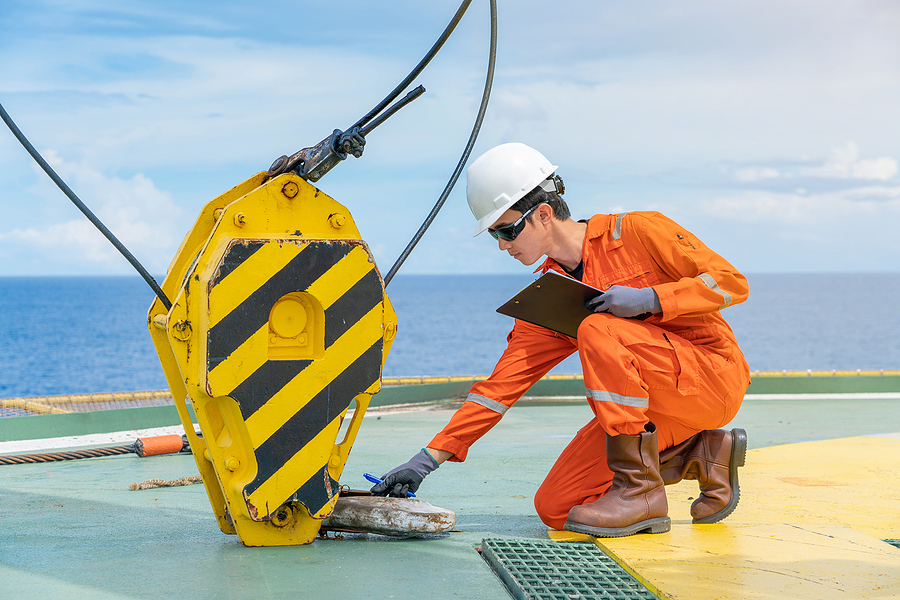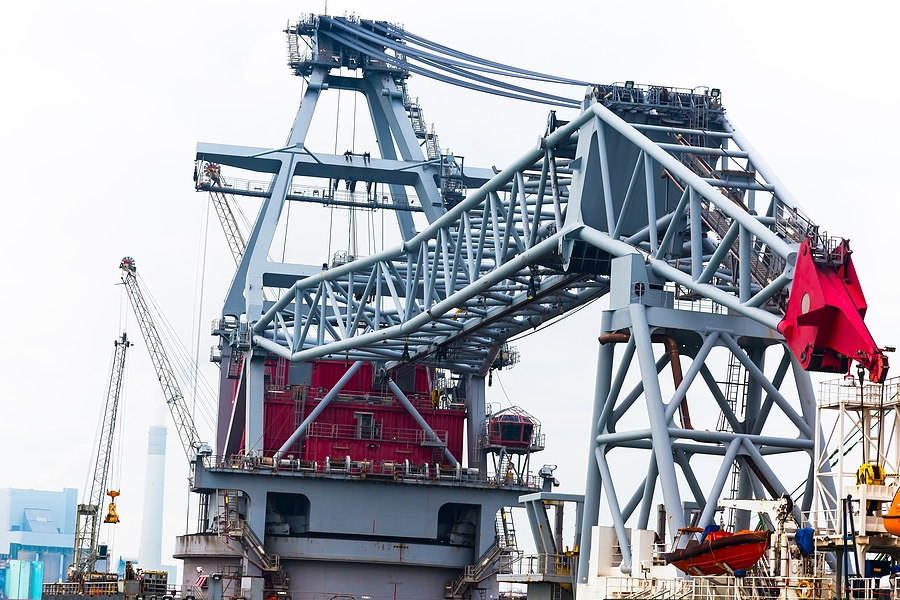
API RP 2D-2 certifications are common throughout API-based markets, and OPITO Offshore Crane Operator qualifications are standard throughout the North Sea and for many international energy clients. Still, no certificate is automatically accepted by every vessel owner, project duty holder, national regulator, or offshore oil and gas client.
The most practical approach is to verify training standards, required competence level, crane category, operating environment, and approval process before sending personnel to the job site.
Offshore crane certifications are only one component in a broader competence package that could also include:
- Experience logs
- Practical courses approved by a training provider
- Competence assessment
- First aid & medical clearance
- Offshore survival course
- Rigger certification
- Crane-specific equipment familiarization
Is There One Offshore Crane License Accepted Everywhere?
Unfortunately not. No single offshore crane operator certification allows an individual to start working anywhere or for every client without question. Each region, project operator, vessel flag, installation type, contract requirement, and governing regulator can influence acceptance.
A globally recognized credential may still require a conversion course before the candidate works unsupervised, or a competency assessment that satisfies the client.
Some companies accept equivalency while others specify one certification scheme by name in the contract.
That is why qualification and authorization should always be viewed as two separate discussions. A worker can have a perfectly valid certificate but may still need to prove competence for that specific offshore crane and lifting job.
Which Credentials Are Commonly Accepted in the United States?
API RP 2D-2-based credentials are two of the most commonly accepted offshore pedestal crane certifications for personnel working in the United States. The API standard covers training courses for operators, riggers, and inspectors.
According to the American Petroleum Institute, approved training courses must meet requirements outlined in API RP 2D-2. That recommended practice works in conjunction with API RP 2D and API Specification 2C for offshore crane maintenance and design.
API provides a list of approved training providers throughout the United States and other international markets like Australia, Brazil, Malaysia, Mexico, Singapore, Thailand, and more.
Having an international network of training providers makes API certifications easy to transfer between regions. However, the receiving client is always responsible for ensuring the crane credential meets project specifications.
Employees transitioning from one company to another may also need updated rigging certification, medical proof of fitness, practical assessments, or documented crane operating experience.
Which Credentials Are Commonly Requested In The North Sea?
OPITO Offshore Crane Operator certifications are common throughout North Sea operations and international offshore energy markets. OPITO divides training into three stages that separate classroom knowledge from work experience and formal competence verification.
Stage 1 focuses on the basic knowledge and hands-on skills necessary for offshore crane operations. Candidates may become familiar with equipment by completing Stage 1. OPITO does not formally assess competence at this stage. Stage 1 also does not permit someone to operate an offshore crane without supervision.
A qualified assessor can sign off Stage 2 and issue OPITO Stage 3 certifications for fixed or floating structures and subsea lifting from vessels. Crane operators who complete Stage 3 must provide proof of experience because working on a fixed platform does not provide the same subsea lifting experience as working on a vessel.
Lifting Operations and Lifting Equipment Regulations (LOLER) outline certification and training standards for using the lifting equipment in the United Kingdom. Employers must plan and supervise lifting operations while employees should only perform tasks for which they are trained and competent.
LOLER specifies the legal responsibilities of employers and clients. LOLER certification does not replace a client’s responsibility to verify an individual operator’s field competence.
Are OPITO and API Credentials Transferable?
Neither credential is automatically transferable. API certifications and OPITO certifications cover many of the same offshore lifting concepts but use different course structures, terminology, experience requirements, and assessment methods.
Company policy may allow one offshore crane certification to replace part or all of another program. Bridging from one scheme to another still might require a competency assessment specific to that employer’s cranes.
OPITO allows select Stage 3 candidates to bypass initial coursework if they hold “an industry recognised stage 2 or stage 3 offshore crane operator certificate.”
While providing a path to accept previous experience and certification, OPITO does not guarantee global reciprocity between Stage 3 certificates from different providers.
Employees and employers should always confirm in writing with the client rather than assuming acceptance based on previous assignments.
What Offshore Crane Credentials Are Accepted in the Middle East?
Clients located throughout the Middle East often use international standards as a base for their company-specific offshore lifting schemes. The requested offshore crane certification may change based on the national energy company, approved training-provider list, and contract wording.
DNV lists several useful details on their offshore crane operator certification process for QatarEnergy workers. The certification scheme combines ISO 15513 with QatarEnergy’s lifting-equipment standard.
The required qualifications include experience, medical fitness, an approved offshore crane operator training course, a theoretical exam, a practical assessment, and logged crane operating hours.
According to the same webpage, “An existing and internationally recognized certificate…may be considered for acceptance” during the recertification process.
Recertification occurs every five years, so international acceptance would apply only to candidates seeking credit for an expired certificate.
However, both the training provider and a ‘competent person’ must still accept the candidate’s existing certificate. International recognition is possible but does not require the client to accept it.
Different Middle Eastern operators may have different certification requirements. Check the certification guidelines with each project opportunity.
Does a Certificate Prove Competence for Every Crane?
No official certificate proves an operator is qualified to use every crane in every environment. Offshore cranes use different control panels, load limits, lift paths, safety equipment, operating motions, and emergency shutdown procedures.
OPITO reminds duty holders and vessel operators to provide familiarization training with the specific crane before allowing a newly certified operator to work unsupervised.
Demonstrating familiarity with that crane is only one reason clients may require a practical assessment before allowing an employee to use the crane. Other topics could include:
Inspect and function test; before lifting; conducting a visual inspection; verifying load charts; crane controls; overview of emergency shutdown; confined (blind) lifts with radio communication; dynamic lifting limits; practicing subsea lifting
DMW Marine Group has written a helpful article covering client competency assessments for offshore crane operators.
These assessments allow clients to verify an operator can translate previous classroom and practical training to the client’s crane model, lifting procedures, and work environment.
Which Credentials Do Offshore Crane Operators Also Need?
Offshore crane operators typically need several supporting credentials in addition to the primary operator certification. Required competencies will vary by client and geographic location.
Additional qualifications can include a certified rigger/banksman credential, offshore medical declaration, employee wellness and emergency response training, up-to-date operator logbook, familiarity with specific lifting categories, lifting supervision certification, permit-to-work training, dropped-object prevention certification, company hand signals, radio communication practices, or site-specific safe working procedures.
API RP 2D-2 has separate guidelines for offshore crane operators, riggers, and inspectors. Each position carries different responsibilities during lifting operations. Just because someone holds a crane operator certificate does not mean they are qualified for additional roles.
Are Equipment Certifications the Same As Operator Credentials?
Equipment certifications are not the same thing as operator credentials. An offshore crane could be designed, manufactured, inspected, or classed by API, ABS, DNV, SOLAS, or other guidelines while the operator follows a completely different qualification process.
DMW Marine Group mentions that its offshore crane selection includes models approved by API, ABS, and DNV. DMW also supports operators with marine crane installations, commissioning, maintenance, repair, and global training services.
While equipment certifications help ensure a crane was engineered and built to specific criteria, they do not serve as credentials that allow an individual operator to use the equipment.
Similarly, a well-qualified operator cannot make up for a lack of inspections, maintenance records, proof of load testing, or proper certification for the crane.
How Do Employers Confirm Credentials Are Accepted Prior to Travel?
Employers should submit a candidate’s entire qualification package to the client for verification before travel or project mobilization. Completing this review early can highlight knowledge gaps before you need to schedule training courses or assessments.
Submit as much information as possible, including: certificate name, issuing organization, training provider, date issued & expiration date, operator level attained, crane type, worker logbook, recent project experience, medical certificate, and any supporting offshore qualifications.
The client can then specify whether further familiarization training, practical assessment, revalidation periods, or additional supervised experience is required. Requesting this information in writing can avoid preventable delays after the operator arrives on-site or aboard the vessel.
DMW Marine Group proudly supports offshore, oilfield, commercial workboat, military, and oceanographic customers with specialized marine crane services and technical solutions.
Which Offshore Crane Credentials Are Accepted Where?
API RP 2D-2 certifications are common throughout API-based offshore markets, and OPITO Offshore Crane Operator certifications are standard throughout the North Sea and international offshore clients. Global standards from DNV, ISO, national organizations, and client-specific programs can also apply.
Each client ultimately decides which certificates it will accept. Contact DMW Marine Group to learn more about marine cranes for offshore service, technical considerations, training, and project-specific lifting requirements.