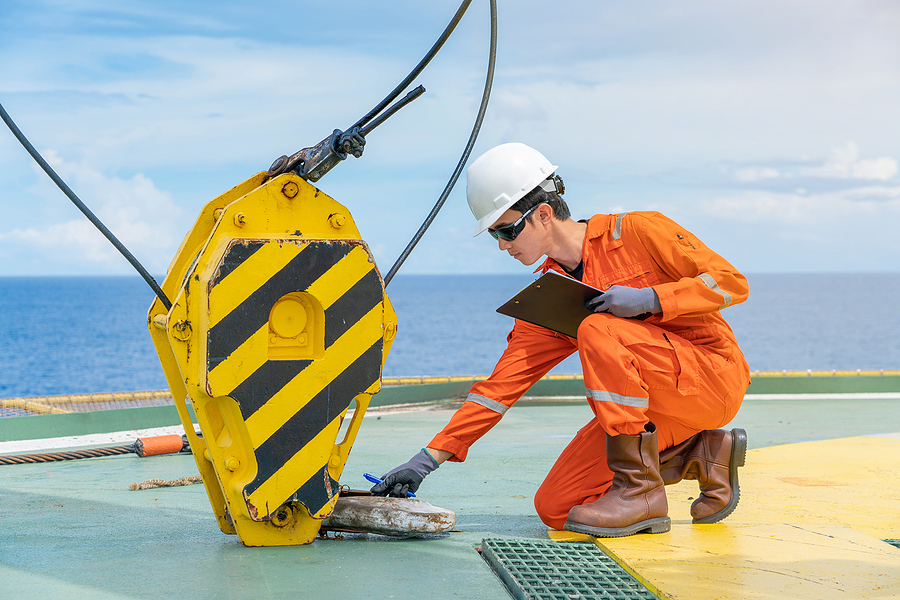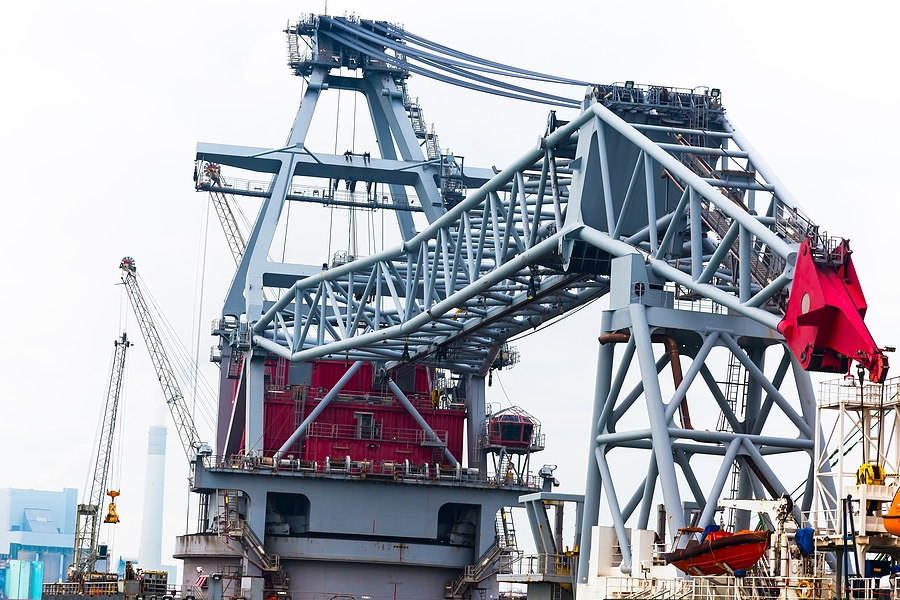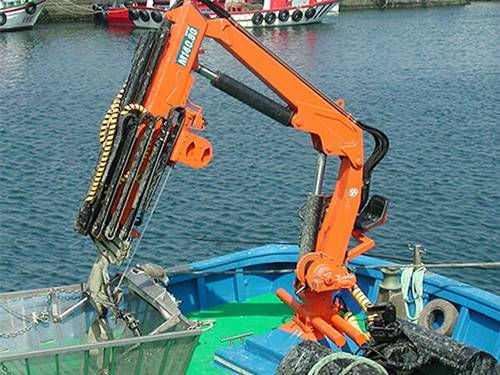
An offshore crane may need to pick up a load on deck, rotate it over the side, and position it precisely above a moving vessel or the water. That movement depends on equipment most people never see working. What does a slewing drive gearbox do on an offshore crane, and why does it matter? The slewing drive gearbox converts power from the crane’s drive system into the high-torque, controlled rotational movement needed to turn the upper crane structure around its pedestal. When that gearbox doesn’t operate correctly, the crane’s ability to position loads safely and efficiently can be compromised.
For offshore operators, the slewing system is anything but a minor mechanical detail. It works under changing loads in an environment filled with salt, humidity, vibration, vessel motion, and demanding duty cycles.
What Is a Slewing Drive Gearbox?
A slewing drive gearbox is part of the system that allows a crane to rotate horizontally around its base. Depending on the crane design, a hydraulic or electric motor powers the gearbox, which reduces speed while increasing torque.
The torque then transfers through the drive pinion to the ring gear in the crane’s slewing system. The result is the controlled rotation operators use to move the boom and load around the crane’s working radius.
Slewing drives are particularly useful where high torque has to be delivered within relatively limited installation space. Manufacturers of offshore drive systems specifically design these units around high torque, compact dimensions, and demanding crane applications.
Why Does the Gearbox Reduce Speed?
A crane does not need its upper structure spinning quickly. It needs tremendous rotational force delivered at a controlled speed.
The gearbox takes relatively high-speed motor input and reduces it through its internal gearing. As rotational speed decreases, available output torque increases. This gives the crane the force it needs to rotate a substantial structure carrying a load.
That reduction also contributes to smoother control. During offshore lifting, operators may need to move a suspended load only a small distance at a time rather than swing the crane rapidly from one position to another.
Is the Slewing Gearbox the Same as the Slew Bearing?
No. The two components work together, but they perform different jobs.
The slew bearing supports the rotating portion of the crane and accommodates the forces generated by the crane structure and load. The slewing drive gearbox provides the rotational drive that turns that structure.
Typically, a gearbox-driven pinion engages the ring gear. As the pinion turns, the crane rotates around the slew bearing.
Both components are critical, but problems with one should not automatically be diagnosed as problems with the other. Investigate unusual movement, noise, or backlash before replacing parts.
Why Is Torque So Important on an Offshore Crane?
Rotating an unloaded crane is one thing. Slewing while handling a substantial load at outreach is another.
Offshore cranes work with forces that change continuously. Boom position, load weight, outreach, vessel movement, wind, and operator inputs can all affect the demands placed on the drive system.
DMW Marine Group notes that marine crane gearboxes routinely carry high torque while experiencing variable loads during slewing, lifting, and luffing. Sudden stops, snagged loads, or abrupt operator inputs can create torque spikes that place additional stress on gears, bearings, shafts, and couplings.
The gearbox therefore has to do more than simply make the crane turn. It has to transmit rotational force predictably under demanding working conditions.
Why Does Precise Slewing Matter Offshore?
Onshore, the ground beneath a crane is generally stationary. Offshore, the working environment may be moving beneath both the crane and its load.
Pitch, roll, wave action, and wind can all influence load behavior. That makes controlled movement particularly important when transferring equipment between a vessel and platform, positioning equipment on deck, or working close to surrounding structures.
A properly functioning slewing drive allows the operator to make controlled rotational movements instead of dealing with excessive play, hesitation, or unpredictable response. Drive manufacturers identify precise positioning as a key requirement for slewing gears used in cranes and similar equipment.
What Can Go Wrong Inside a Slewing Drive Gearbox?
Gearboxes normally provide warning signs as internal components begin to deteriorate. DMW Marine Group identifies heat, abnormal noise, vibration, and contaminated lubricant among symptoms that deserve attention.
Gear tooth pitting is one potential problem. Improper lubrication, contamination, heavy loading, or misalignment can damage contact surfaces and eventually lead to more significant gear deterioration.
Bearings can also suffer from poor lubrication, misalignment, contamination, or excessive loading. Once bearing material or other debris circulates through the lubricant, it can affect additional internal components.
Ignoring early symptoms can turn a manageable maintenance issue into a much larger repair.
Why Is Saltwater So Hard on Slewing Gearboxes?
Offshore equipment operates in an environment where moisture is difficult to avoid. Salt spray, humidity, washdowns, and temperature changes all increase the possibility of corrosion and water contamination.
Seals provide an important defense. Once a seal begins to deteriorate, moisture can enter the gearbox while lubricant may begin leaking out. Water inside the housing reduces lubricant performance and can contribute to corrosion on bearings and gear surfaces.
Condensation can create problems even when the gearbox has not been directly exposed to seawater.
For offshore operators, protecting the gearbox from contamination is therefore just as important as maintaining the mechanical components inside it.
What Does Backlash Tell You About the Slewing System?
Backlash is the small amount of movement or clearance between mating gear teeth. Some clearance is necessary, but excessive play can indicate wear or improper adjustment.
If backlash increases, the operator may notice delayed response when changing slewing direction. Loads can also become more difficult to position smoothly.
Slewing drive systems are engineered to control gear engagement carefully. Liebherr, for example, notes that matched slewing drive and bearing systems can be designed for minimal backlash.
Changes in the way the crane responds should therefore be taken seriously rather than accepted as normal aging.
How Can Operators Protect a Slewing Drive Gearbox?
Good lubrication practices are one of the most important starting points. Use the specified lubricant, maintain the correct level, and monitor its condition rather than waiting for a problem to appear.
Always watch the temperature, vibration, and noise. Include seals, mounts, alignment points, and fasteners in routine inspections.
Oil sampling can reveal water, wear metals, or other contamination before serious internal damage becomes obvious from the outside.
Maintenance intervals should reflect the crane’s actual working environment and duty cycle. A heavily used offshore crane operating in saltwater conditions may require more attention than equipment with lighter or less frequent service.
What Does a Slewing Drive Gearbox Do on an Offshore Crane, and Why Does It Matter?
Ultimately, it’s about controlled movement. The gearbox turns motor power into the high torque needed to rotate the crane, helping operators position loads where they need to go while working in one of the toughest mechanical environments imaginable.
When noise, heat, vibration, excessive play, lubricant contamination, or other problems begin appearing, waiting for complete failure can become an expensive decision. Contact DMW Marine Group to discuss slewing drive gearbox inspection, troubleshooting, repair, or modernization and keep your offshore crane ready for the work ahead.