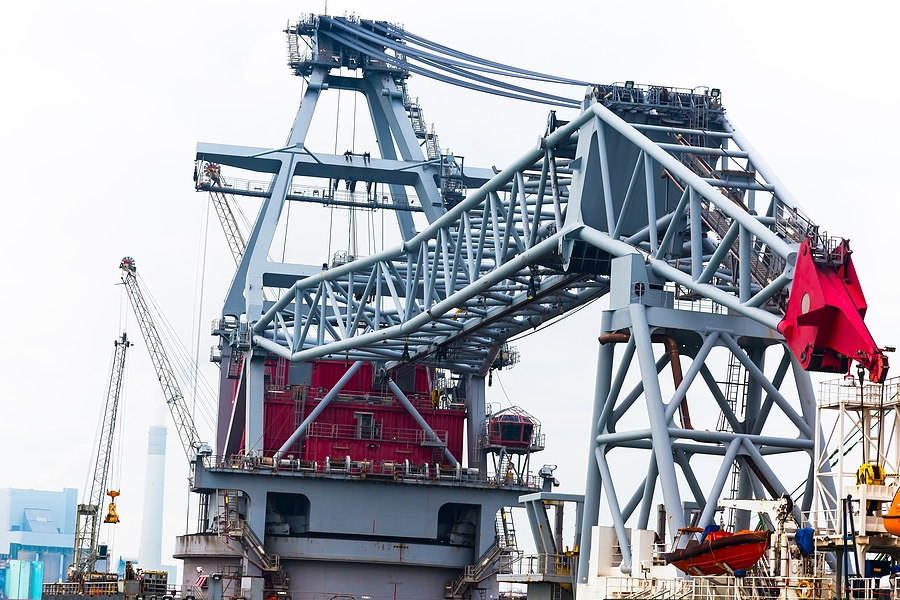
Look across an offshore drilling rig, production platform, or wind installation, and you’ll likely see a crane rising from a fixed column near the edge of the structure. What is a pedestal crane, and why is it so common on offshore platforms? A pedestal crane is permanently mounted to a structural pedestal that transfers lifting forces into the supporting platform. The arrangement gives offshore facilities a compact, dependable way to move supplies, equipment, containers, tools, and other loads without dedicating a large section of valuable deck space to the crane itself.
That combination of structural integration and everyday practicality explains why pedestal-mounted cranes have become such a familiar sight offshore. They are not simply land cranes placed near the ocean. They are engineered around the demands of marine lifting and the structure that supports them.
What Exactly Is a Pedestal Crane?
A pedestal crane is a rotating crane mounted on a fixed vertical support, or pedestal. The pedestal is tied into the structure below it, creating a stable mounting point from which the upper crane can rotate and perform lifts.
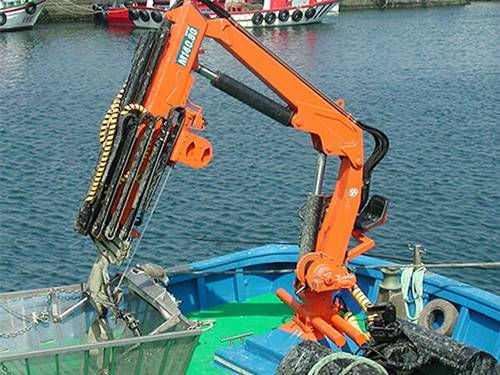
The crane itself may use different boom arrangements depending on the application. Offshore designs can include knuckle boom, telescopic boom, stiff-boom, or other configurations.
DMW Marine Group supplies marine cranes in numerous configurations and notes that its telescoping and knuckle boom cranes are particularly well suited to offshore work. The company has supplied cranes for offshore oil drilling and service providers for decades.
Why Is the Pedestal So Important?
The pedestal does much more than hold the crane above the deck. It provides the structural connection needed to transfer lift forces into the platform.
Every time a crane picks up a load, forces are created through the boom, slewing system, pedestal, and supporting structure. As outreach increases or a load moves around the crane, those forces change.
A properly engineered pedestal gives those forces a defined path into reinforced portions of the platform. DMW explains that this structural relationship is one of the major reasons pedestal-mounted cranes work so well offshore.
That makes crane selection inseparable from platform design. Capacity, boom length, outreach, mounting location, and the structure beneath the pedestal must all work together.
Why Are Pedestal Cranes So Common on Offshore Platforms?
Offshore platforms perform many routine lifts, but most differ from the enormous construction lifts associated with dedicated heavy-lift crane vessels.
Platform crews may need to transfer supplies from a service vessel, move maintenance equipment, handle containers, reposition tools, or support daily operations. These jobs repeat throughout the facility’s working life.
A pedestal crane provides a permanent lifting station that is ready when needed.
No mobile carrier needs to be positioned, and no large ground footprint needs to be established. The mounting point is already part of the offshore structure, which makes the design especially practical where deck space is at a premium.
Can a Pedestal Crane Rotate Around the Platform?
Yes. The upper portion of a pedestal crane typically slews around the mounting point, allowing the operator to move loads through a broad working area.
That rotational movement is one reason mounting location deserves careful attention. A properly positioned crane can serve the deck while also reaching over the side to a supply vessel or other transfer area.
The goal is not necessarily to achieve the greatest possible outreach. It is to provide the outreach the operation actually needs while staying within the crane’s structural and load limits.
For many platforms, that means positioning the crane where it can reach common pickup and landing zones without occupying more deck space than necessary.
Why Does a Small Footprint Matter Offshore?
Space disappears quickly on an offshore platform. Drilling equipment, piping, processing systems, electrical equipment, walkways, safety zones, storage, crew facilities, and maintenance areas all compete for room.
The crane cannot simply take over the deck.
A pedestal-mounted design concentrates the crane’s supporting structure at one permanent location. Depending on the crane configuration, the boom can then reach outward to perform work while leaving surrounding deck areas available for other operations.
DMW Marine also offers articulated knuckle boom designs that can fold into relatively compact arrangements when not in use. That can be particularly useful when operators need lifting capability without sacrificing more deck area than necessary.
How Is an Offshore Pedestal Crane Different From a Mobile Land Crane?
A mobile land crane is designed to travel between jobs. That’s why it’s important to establish a stable lifting base once it arrives. A pedestal crane is installed as part of the vessel or offshore facility.
Ultimately, the permanent relationship changes how the crane is engineered.
Instead of outriggers transferring forces into the ground, the pedestal transfers crane loads into the supporting offshore structure. Structural engineers must therefore consider what happens to that structure as the crane rotates, changes outreach, and handles different loads.
The American Petroleum Institute maintains API Specification 2C specifically for offshore pedestal-mounted cranes. The current eighth edition includes design methodologies for structural considerations and subsea lifting, underscoring how specialized this equipment is.
DMW Marine Group has supplied marine cranes to offshore oil drilling and service providers and other demanding maritime industries for more than 30 years. Whether a project requires a new crane, a specialized configuration, replacement components, inspection, repair, or modernization, contact DMW Marine Group to discuss a pedestal crane solution designed around your platform, lifting requirements, and operating environment.